

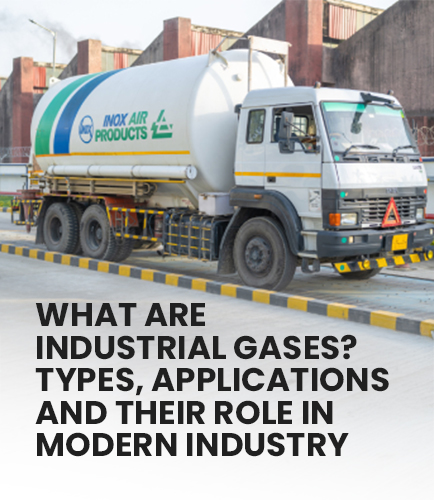
What Are Industrial Gases? Types, Applications, and Their Role in Modern Industry
Industrial gases form the invisible backbone of modern manufacturing, healthcare, energy, and technology industries. From producing steel and refining chemicals to enabling semiconductor manufacturing and medical care, industrial gases play a critical role in ensuring operational efficiency, product quality, and safety across sectors.
Understanding what industrial gases are and how they are used helps businesses optimize their processes, improve productivity, and maintain reliable operations.
These gases can be supplied in different forms depending on the scale and application:
Today, industrial gases are essential across sectors such as metals, healthcare, food processing, electronics, energy, chemicals, and pharmaceuticals.
Oxygen (O₂)
Widely used in steelmaking, metal cutting, chemical processing, and medical applications. Oxygen enhances combustion efficiency and supports high-temperature industrial processes.
Nitrogen (N₂)
An inert gas commonly used for blanketing, purging, pressure testing, and food preservation. Its non-reactive nature makes it ideal for preventing oxidation and contamination.
Argon (Ar)
A noble gas known for its stability and inertness. Argon is extensively used in welding, electronics manufacturing, and metallurgical processes.
These gases form the foundation of industrial gas applications across many sectors.
Common examples include:
Natural Gas – Widely used for industrial heating and power generation.
Hydrogen – Increasingly important for refining, chemical processing, and emerging clean energy solutions.
Acetylene – Known for its extremely high flame temperature, making it ideal for welding and metal cutting.
Fuel gases are critical in industries that rely on efficient thermal energy for manufacturing and processing.
These gases are widely used in:
The company supports a diverse range of sectors including steel, manufacturing, electronics, healthcare, food processing, and energy through advanced production infrastructure and a robust supply network.
INOX Air Products offers:
Understanding what industrial gases are and how they are used helps businesses optimize their processes, improve productivity, and maintain reliable operations.
What Are Industrial Gases?
Industrial gases are gaseous materials that are produced, purified, and supplied specifically for industrial applications. Unlike consumer gases used in households, industrial gases are manufactured and handled under strict quality and safety standards to meet the precise requirements of different industries.These gases can be supplied in different forms depending on the scale and application:
- Compressed gases supplied in cylinders
- Liquefied gases stored in cryogenic tanks
- Pipeline supply from on-site gas production plants
Today, industrial gases are essential across sectors such as metals, healthcare, food processing, electronics, energy, chemicals, and pharmaceuticals.
Types of Industrial Gases
Industrial gases can broadly be categorized based on their source and application.1. Atmospheric Gases
Atmospheric gases are extracted from air through advanced processes such as air separation. The most commonly used atmospheric gases include:Oxygen (O₂)
Widely used in steelmaking, metal cutting, chemical processing, and medical applications. Oxygen enhances combustion efficiency and supports high-temperature industrial processes.
Nitrogen (N₂)
An inert gas commonly used for blanketing, purging, pressure testing, and food preservation. Its non-reactive nature makes it ideal for preventing oxidation and contamination.
Argon (Ar)
A noble gas known for its stability and inertness. Argon is extensively used in welding, electronics manufacturing, and metallurgical processes.
These gases form the foundation of industrial gas applications across many sectors.
2. Fuel Gases
Fuel gases are primarily used as energy sources in industrial processes that require high-temperature combustion.Common examples include:
Natural Gas – Widely used for industrial heating and power generation.
Hydrogen – Increasingly important for refining, chemical processing, and emerging clean energy solutions.
Acetylene – Known for its extremely high flame temperature, making it ideal for welding and metal cutting.
Fuel gases are critical in industries that rely on efficient thermal energy for manufacturing and processing.
3. Specialty Gases
Specialty gases refer to high-purity gases or carefully formulated gas mixtures used in highly controlled applications.These gases are widely used in:
- Semiconductor manufacturing
- Scientific research laboratories
- Pharmaceutical production
- Electronics fabrication
- Solar cell manufacturing
Applications of Industrial Gases Across Industries
Industrial gases are used across a wide range of industries to enhance process efficiency, safety, and product performance.- Healthcare and Medical Services
Medical gases play a vital role in modern healthcare systems.
Oxygen is essential for respiratory therapy, anesthesia, and life-support systems. High-purity medical gases are also used in diagnostic laboratories and surgical procedures, where reliability and purity are critical. - Metals and Manufacturing
Industrial gases are indispensable in metal production and fabrication processes.
Applications include:- Welding and metal cutting
- Heat treatment
- Steelmaking processes such as oxygen blowing
- Shielding gases in advanced welding technologies
- Energy and Power Generation
Industrial gases support operations across the energy sector, including refineries, power plants, and emerging renewable energy systems.
Nitrogen is widely used for purging pipelines and preventing contamination in critical equipment.
Hydrogen is increasingly important in clean energy applications and fuel technologies. - Electronics and Semiconductor Manufacturing
The electronics industry relies heavily on ultra-high purity gases to ensure contamination-free manufacturing environments.
Gases such as nitrogen, hydrogen, and specialty gas mixtures are essential for:- Semiconductor fabrication
- Display manufacturing
- Integrated circuit production
- Food and Beverage Processing
Industrial gases play an important role in maintaining food quality, safety, and shelf life.
Common applications include:- Carbon Dioxide (CO₂)
Used in beverage carbonation and modified atmosphere packaging (MAP) to inhibit microbial growth. - Nitrogen (N₂)
Used for inert packaging environments that delay oxidation and preserve freshness.
- Carbon Dioxide (CO₂)
- Chemicals and Pharmaceuticals
Industrial gases are widely used in chemical synthesis, process control, and reaction environments.
In pharmaceutical manufacturing, gases must meet stringent purity and regulatory requirements to ensure product integrity and compliance with global standards.
The Importance of Purity, Safety, and Reliable Supply
The effectiveness of industrial gases depends on three critical factors:Purity
High purity levels ensure consistent process performance and prevent contamination that could compromise product quality.Safety
Many industrial gases are stored under pressure or may be reactive. Strict safety protocols, proper storage, and trained handling are essential for safe operations.Reliable Supply
For industries that operate continuously, such as steel, chemicals, and healthcare, a dependable gas supply is crucial to avoid operational disruptions.Why Choose INOX Air Products for Industrial Gas Solutions?
As one of India’s leading industrial gas companies, INOX Air Products delivers reliable, high-purity gas solutions to industries across the country.The company supports a diverse range of sectors including steel, manufacturing, electronics, healthcare, food processing, and energy through advanced production infrastructure and a robust supply network.
INOX Air Products offers:
- High-purity industrial and specialty gases
- Large-scale on-site gas production facilities
- Bulk liquid gas supply through cryogenic tankers
- Cylinder supply for small and medium-scale industries
- Technical expertise to optimize industrial gas applications
Get in Touch!
Maximize Productivity With Our High-Purity Gas Solutions