
Role of Nitrogen in the Food Industry
The modern-day food with an amazing shelf life is the result of a silent marvel of engineering.
Modern food preservation technologies enable packaged salads to remain fresh and crisp for
extended periods, while snack products such as potato chips retain their texture and crunch
even months after packaging. The secret behind this preservation is not a miracle but the result
of advancements in the use of Nitrogen Gas.
The growing population worldwide has increased the demand in the food industry as well. And as it evolves to meet the demands and longer supply chains, Nitrogen in Food Processing has become an indispensable tool. It acts as an invisible guardian, protecting the nutritional value, texture, and flavour of our food from the moment of harvest to the second it reaches our plates.
While Oxygen is essential for life, its long-term exposure becomes destructive for organic matter. Through a process called Oxidation, Oxygen interacts with food molecules, leading to several negative outcomes:
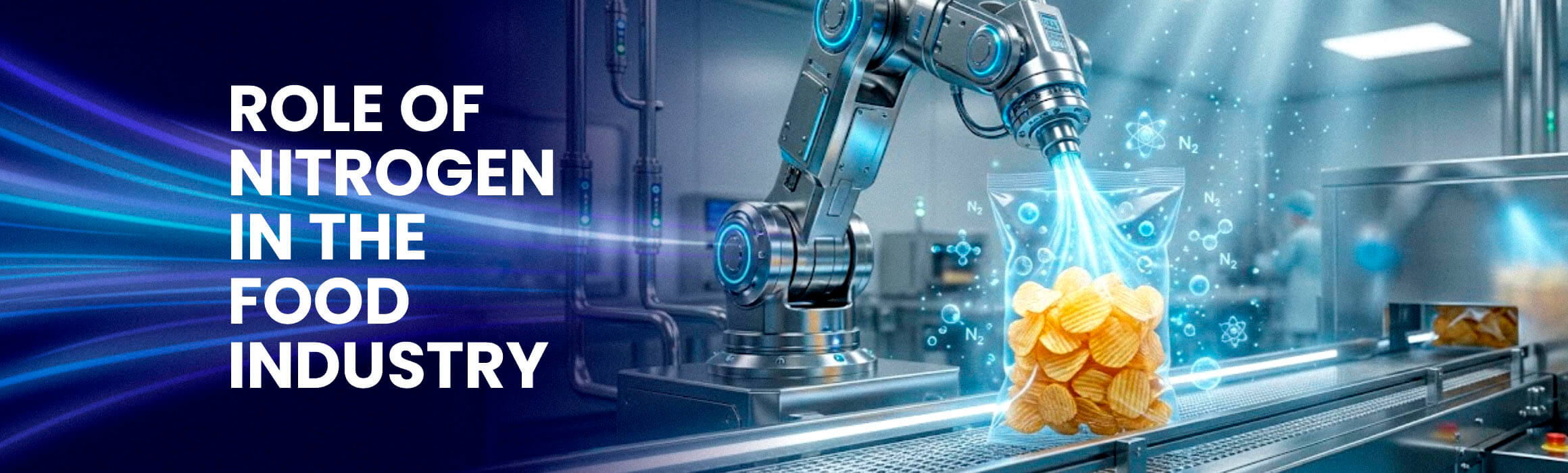
Another common application of Nitrogen Gas in the food industry is something that everyone knows about. It is used in packaging snacking items like potato chips. Producers eliminate the Oxygen in the packages that would otherwise turn the oils in potato chips or nuts rancid. Second, it provides a physical "cushion". When you open a bag of chips and find a large amount of "air" inside, you aren't being cheated; you are seeing the Nitrogen pillow that prevented your chips from being crushed into dust during shipping.
For fresh produce, Nitrogen packaging slows down the respiration rate of the fruits or vegetables. This slows the respiration process of fresh produce, helping extend shelf life.
From keeping our coffee aromatic to ensuring our salads remain crisp, Nitrogen is the silent partner of the food industry. Its ability to preserve quality without altering the essence of the food makes it one of the most important tools in the modern quest for food security and waste reduction. As technology improves, the efficiency and accessibility of Nitrogen will only continue to grow, ensuring that our global food system remains fresh, safe, and sustainable.
The growing population worldwide has increased the demand in the food industry as well. And as it evolves to meet the demands and longer supply chains, Nitrogen in Food Processing has become an indispensable tool. It acts as an invisible guardian, protecting the nutritional value, texture, and flavour of our food from the moment of harvest to the second it reaches our plates.
Applications of Nitrogen in the Food Industry:
To understand the application of Nitrogen in the food industry, one must first understand the primary causes of food damage, one of which is surprisingly Oxygen.While Oxygen is essential for life, its long-term exposure becomes destructive for organic matter. Through a process called Oxidation, Oxygen interacts with food molecules, leading to several negative outcomes:
- Rancidity: Fats and oils in food items like meat will react with Oxygen to disturb natural flavours and create unpleasant odours.
- Aerobic Spoilage: Bacteria, mould, and yeast require oxygen to grow and multiply.
- Discolouration: Iron-rich food products like sliced apples or lettuce turn brown quickly when exposed to Oxygen.
Mastering the Art of Packaging: Nitrogen's Role in MAP
One of the most common applications of Nitrogen in the food industry is using Nitrogen Gas for food packaging, specifically within Modified Atmosphere Packaging (MAP). MAP is a sophisticated technique where packers will replace the atmospheric air inside a package with a protective gas mix, which is quite often pure Nitrogen or a Nitrogen-CO₂ blend.Another common application of Nitrogen Gas in the food industry is something that everyone knows about. It is used in packaging snacking items like potato chips. Producers eliminate the Oxygen in the packages that would otherwise turn the oils in potato chips or nuts rancid. Second, it provides a physical "cushion". When you open a bag of chips and find a large amount of "air" inside, you aren't being cheated; you are seeing the Nitrogen pillow that prevented your chips from being crushed into dust during shipping.
For fresh produce, Nitrogen packaging slows down the respiration rate of the fruits or vegetables. This slows the respiration process of fresh produce, helping extend shelf life.
Beyond the Bag: Diverse Nitrogen Uses
The Nitrogen use in Food Industry settings extends far beyond just bagging snacks. It is a versatile utility used throughout the production cycle:-
Sparging and Stripping
In the production of liquids like packaged fruit juices, wine bottles, and cooking oils, Oxygen can become dissolved within the liquid itself. Manufacturers use Nitrogen sparging, bubbling Nitrogen gas through the liquid to "scrub" out the dissolved oxygen. This ensures the liquid remains stable and flavourful throughout its shelf life. -
Pressure Transfer and Inerting
Moving food products through pipes can be tricky. Using compressed air can introduce moisture and oxygen. Instead, Nitrogen is used to "push" products like flour, sugar, or oils through the system. Additionally, Nitrogen is used to "blanket" large storage silos, ensuring that the headspace above the stored food is free of Oxygen and moisture, which also prevents dust explosions in volatile environments like flour mills. -
Coffee Preservation
Coffee is extremely sensitive to oxygen. Once roasted, coffee beans release oils that can oxidise rapidly, destroying the complex aromatic profiles that consumers pay a premium for. Nitrogen is used to flush coffee bags and pods, ensuring that the "freshly roasted" scent is preserved until the seal is broken.
A Sustainable and Safe Future
As consumers demand "clean labels" with fewer chemical preservatives, Nitrogen provides a natural solution. It is a "process aid" rather than an additive; it does its job and then dissipates into the atmosphere when the package is opened, leaving no residue behind.From keeping our coffee aromatic to ensuring our salads remain crisp, Nitrogen is the silent partner of the food industry. Its ability to preserve quality without altering the essence of the food makes it one of the most important tools in the modern quest for food security and waste reduction. As technology improves, the efficiency and accessibility of Nitrogen will only continue to grow, ensuring that our global food system remains fresh, safe, and sustainable.
Get in Touch!
Maximize Productivity With Our High-Purity Gas Solutions