
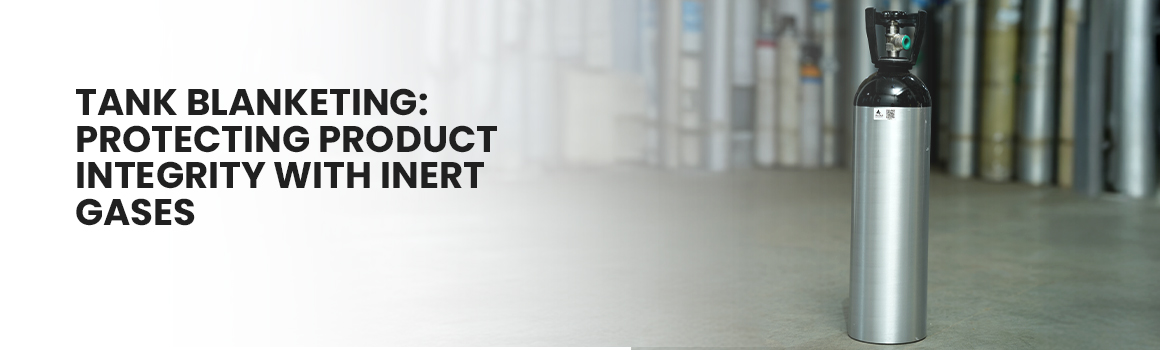
Tank Blanketing: Protecting Product Integrity with Inert Gases
Protecting the quality, purity, and safety of stored chemicals and materials is critical in industrial facilities. Many products—especially chemicals, fuels, pharmaceuticals, and food ingredients—can degrade when exposed to oxygen, moisture, or airborne contaminants.
To prevent these risks, industries widely use a technique known as tank blanketing (also called inert gas blanketing). This process involves filling the empty space above stored liquids with an inert gas—typically nitrogen—to displace oxygen and create a protective atmosphere.
By maintaining a stable and oxygen-free environment inside storage tanks, blanketing helps prevent oxidation, contamination, and hazardous reactions, ensuring product integrity throughout storage and handling.
This article explains what blanketing is, how inert gases protect products, and which industries rely on blanketing systems to maintain product quality and safety.
This inert gas layer:
Modern nitrogen supply systems and on-site nitrogen generators allow industries to maintain continuous and controlled blanketing conditions, ensuring safe and efficient storage operations.
Key benefits include:
With advanced supply infrastructure, technical expertise, and reliable gas delivery systems, INOX Air Products helps businesses safeguard their products, operations, and personnel.
Industrial gases—particularly nitrogen—play a vital role in maintaining product quality, operational safety, and regulatory compliance.
By partnering with reliable industrial gas providers such as INOX Air Products, businesses can implement efficient blanketing systems that improve product stability, extend shelf life, and reduce operational risks.
To prevent these risks, industries widely use a technique known as tank blanketing (also called inert gas blanketing). This process involves filling the empty space above stored liquids with an inert gas—typically nitrogen—to displace oxygen and create a protective atmosphere.
By maintaining a stable and oxygen-free environment inside storage tanks, blanketing helps prevent oxidation, contamination, and hazardous reactions, ensuring product integrity throughout storage and handling.
This article explains what blanketing is, how inert gases protect products, and which industries rely on blanketing systems to maintain product quality and safety.
What is Blanketing in Industrial Processes?
Blanketing is an industrial storage technique in which an inert gas is introduced into the headspace of a storage tank to form a protective gas layer above the stored material.This inert gas layer:
- Displaces oxygen from the tank
- Prevents oxidation reactions
- Reduces contamination risks
- Maintains product stability during storage
Modern nitrogen supply systems and on-site nitrogen generators allow industries to maintain continuous and controlled blanketing conditions, ensuring safe and efficient storage operations.
Benefits of Inert Gas Blanketing
Industrial blanketing systems help protect sensitive materials and improve operational safety.Key benefits include:
- Prevention of oxidation of reactive materials
- Protection against moisture contamination
- Maintaining product purity and stability
- Reducing fire and explosion risks in storage tanks
How Inert Gases Protect Stored Products
Inert gases such as nitrogen, argon, and carbon dioxide do not react chemically under normal industrial conditions. When used in blanketing systems, they replace oxygen in the tank headspace and create a protective barrier between the stored product and ambient air.- Prevention of Oxidation
Many chemicals, fuels, and food ingredients react with oxygen when exposed to air. Oxidation can alter chemical properties, degrade product quality, and shorten shelf life.
Inert gas blanketing eliminates oxygen exposure, preventing these unwanted reactions. - Moisture Control
Air often contains moisture that can trigger chemical reactions or degrade hygroscopic materials.
Inert gas blanketing minimizes humidity exposure and helps protect moisture-sensitive products. - Prevention of Contamination
Blanketing systems maintain positive pressure inside storage tanks, preventing external contaminants such as dust, air, or airborne particles from entering the system.
This helps maintain a clean and controlled storage environment.
Common Blanketing Gases Used in Industry
Several inert gases are used for tank blanketing depending on the application.- Nitrogen
Nitrogen is the most widely used blanketing gas in industrial applications.
Key advantages include:- Chemically inert under most conditions
- Abundant and cost-effective
- Suitable for a wide range of industries
- Argon
Argon is another inert gas used when higher levels of oxidation protection are required.
Because argon is denser than air, it forms a strong protective layer over stored materials and is often used in specialized chemical and high-value manufacturing processes. - Carbon Dioxide
Carbon dioxide is commonly used in food and beverage applications, where it helps preserve product freshness and extend shelf life.
However, compatibility with the stored material must be carefully evaluated before using CO₂ for blanketing.
Industries that rely on Blanketing Systems
Many industries depend on inert gas blanketing to maintain product quality and safety.- Chemical Industry
Chemical manufacturers handle volatile and reactive compounds. Blanketing reduces oxygen levels in storage tanks, preventing oxidation reactions and lowering explosion risks. - Pharmaceutical Industry
In the pharmaceutical sector, maintaining product purity and stability is essential.
Blanketing protects active pharmaceutical ingredients (APIs) and intermediates from contamination and oxidation, helping manufacturers comply with strict regulatory standards. - Food and Beverage Industry
Products such as edible oils, flavorings, and liquid ingredients are highly sensitive to oxygen exposure.
Blanketing helps maintain freshness, extend shelf life, and preserve flavor, color, and nutritional value. - Petrochemical and Energy Sector
In petrochemical storage facilities, inert gas blanketing helps maintain fuel quality, reduce vapor formation, and minimize fire hazards during storage and transportation. - Choosing the Right Industrial Gas Supplier
The effectiveness of a blanketing system depends on gas purity, supply reliability, and technical support.
Working with an experienced industrial gas supplier ensures consistent gas quality and compliance with industry standards.
With advanced supply infrastructure, technical expertise, and reliable gas delivery systems, INOX Air Products helps businesses safeguard their products, operations, and personnel.
Conclusion
Tank blanketing is a critical process for industries that store oxygen-sensitive materials. By creating an inert atmosphere inside storage tanks, blanketing protects products from oxidation, contamination, and moisture exposure.Industrial gases—particularly nitrogen—play a vital role in maintaining product quality, operational safety, and regulatory compliance.
By partnering with reliable industrial gas providers such as INOX Air Products, businesses can implement efficient blanketing systems that improve product stability, extend shelf life, and reduce operational risks.
Get in Touch!
Maximize Productivity With Our High-Purity Gas Solutions